
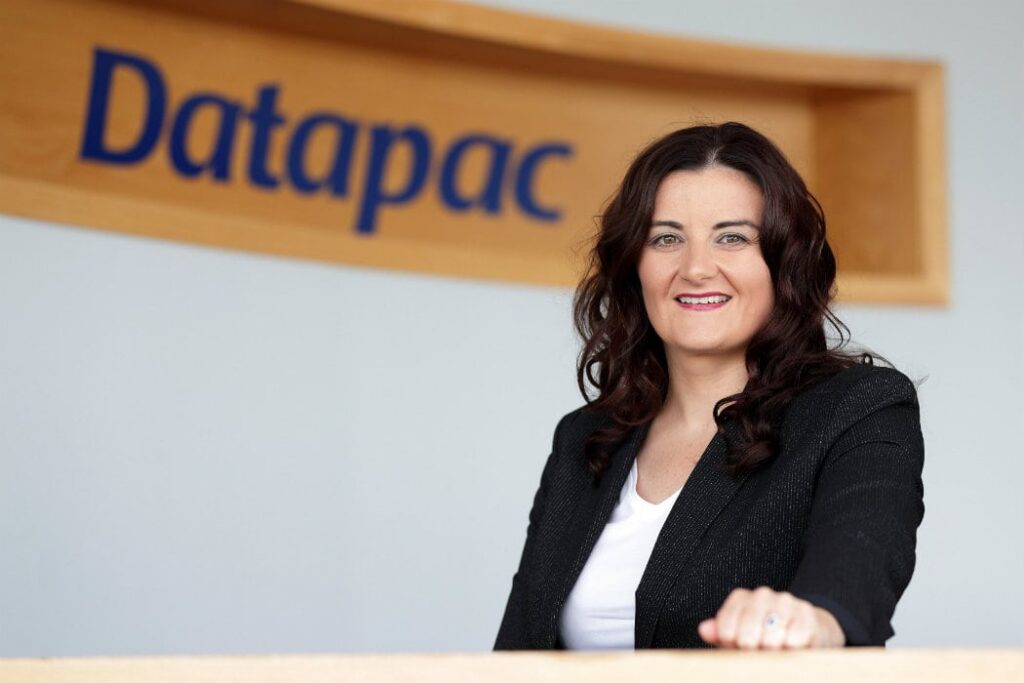
This article is based on an interview originally published in the Business Post as part of their Focus on Managed ICT Services report in December 2025. Read the original article here.
What is a common concern that hold organisations back from moving to a managed services model?
Many organisations worry about losing control. This is particularly common among internal IT leads who are concerned that outsourcing might diminish their role or reduce their influence. In practice, the opposite tends to be true. Co-managed IT models are now standard across the mid-market, allowing internal teams to retain ownership of strategy while a partner takes on routine but essential operational responsibilities such as monitoring, patching, security operations and user support. This gives internal teams the space to concentrate on long-term planning and improvement.
What are common misconceptions that organisations have about outsourcing IT?
A common misconception is that outsourcing should directly reduce IT spend. The real value lies in the outcomes it enables: improved reliability, stronger security, higher performance and the ability for internal teams to progress strategic work rather than being limited by operational demands. Outsourcing provides predictable investment and access to mature processes and specialist expertise that would be difficult for most organisations to replicate internally.
Another misconception is that all managed service offerings are broadly the same. In reality, the quality of a managed service depends heavily on the calibre of the tools, processes and expertise underpinning it. When comparing providers, it is important for organisations to look beyond headline pricing and understand what is included, how services are delivered and the level of consistency and assurance they can expect. These differences can significantly influence the overall experience and long-term value of the partnership.
What factors are driving changes in how organisations engage with outsourced IT services, and how is this influencing the way they consume those services?
One of the biggest drivers for change is the growing focus on resilience. Insurers and regulators are placing new levels of scrutiny on cyber risk and business continuity. As a result, organisational boards are increasingly relying on their IT partner’s ability to strengthen governance, reduce exposure and provide assurance across security and recovery.
The increasing complexity of modern IT environments is also reshaping expectations. With continual changes in cyber threats, licensing models and vendor ecosystems, IT costs can escalate quickly. Organisations therefore want much greater visibility into where their IT spend is going and the value it delivers. As a result, there is a clear trend toward partners who not only operate systems, but also provide insight, analytics and continuous optimisation.
We are also seeing organisations become more comfortable consuming IT as a service. SaaS applications and Managed Print Services have become commonplace, and many organisations have seen first-hand the benefits of predictable service delivery, lifecycle management and continuous improvement that these models provide. This experience is now driving interest in extending the same approach to other areas of the IT stack, with offerings such as Device-as-a-Service growing rapidly.
The rapid rise of AI is having a significant influence. AI has moved from an emerging curiosity to a strategic priority, and early, effective adoption is seen as a competitive advantage. Organisations are turning to their IT partners for guidance on how to integrate AI in a way that delivers meaningful, business-led outcomes. This is driving demand for partners with the capability to support structured adoption and ongoing evolution, rather than simply enabling access to new tools.
In addition to predictable costs and guaranteed support, what are some of the less obvious, but highly impactful, ways a strong IT partner adds value to an organisation?
Early visibility is a major benefit. Partners see trends emerging across multiple customers and vendors long before they reach mainstream awareness. The recent VMware licensing changes are a good example. Many organisations only realised the impact when renewals appeared, while those working with proactive partners received early guidance and options.
Strategic input is another area of value, though it varies by organisation. Smaller customers often rely on partners for both direction and day-to-day management. Larger organisations tend to prefer a co-managed approach in which the partner complements internal expertise, validates decisions and brings broader market context. The aim is not to replace internal teams but to expand their capability.
Partners also bring scale. Significant investment goes into training, certifications, cybersecurity platforms and automation tools. Most organisations would struggle to fund or manage these independently. Through a shared consumption model, customers gain access to enterprise-grade capability without the cost burden.
AI is still one of the hottest topics in tech. What trends and patterns are you seeing in business adoption of AI, and what are some ways an IT partner can support their customer’s journey towards AI adoption?
Interest in AI remains very high, but the conversation has matured. The early belief that AI was a universal solution has faded. Organisations now ask more targeted questions about genuine use cases, measurable outcomes and security implications. Early adopters are discovering that ROI depends on structured implementation rather than enthusiasm alone.
AI should be treated like any major technology change: carefully, securely and in stages. Governance and access controls must be established before widespread rollout, especially to prevent accidental exposure of sensitive information.
A partner can help organisations adopt AI in a measured way. This usually begins with structured pilots that create internal “AI champions” who understand both the opportunities and the risks. Once meaningful use cases are validated, AI can be rolled out more broadly. Partners also help organisations prepare for emerging capabilities such as agentic AI by ensuring the IT environment and data governance foundations are ready.
As IT skills shortages continue to affect organisations, how is on-demand IT resourcing evolving, and what benefits does it offer for customers?
IT skills shortages remain a challenge for many organisations, particularly when key staff are unavailable or when specialist expertise is required at short notice. On-demand resourcing offers a practical way to maintain continuity, provide cover during planned or unplanned leave, and scale capacity to meet seasonal demand or deliver specific projects without taking on long-term overhead.
We are seeing more organisations turn to their existing IT partners for this support. A key benefit is the ability to draw on a broad pool of vetted technical talent, with candidates screened and interviewed by multiple subject matter experts to ensure the right technical capability and organisational fit from the outset. Once placed, the individual works as a dedicated resource for the customer, with the added advantage of being able to access a wider technical team for guidance and escalation when required. This approach provides flexibility and continuity, while ensuring the model remains sustainable and service levels are maintained.
Many are predicting that NIS 2 will finally be transposed into Irish legislation in 2026. This will likely come with a surge in interest for cybersecurity and compliance support services. For organisations that haven’t begun their readiness journey, or are unsure whether NIS 2 will apply to them, what advice do you have?
Most expect NIS2 to be implemented in Ireland in 2026, and it will cover a much wider set of sectors than the original NIS directive. Organisations unsure of their status should consult the National Cyber Security Centre’s website for guidance.
However, NIS2 matters even for those not directly regulated. One of the directive’s core aims is to strengthen supply chain security across the EU. This means regulated organisations will start requiring higher standards from their suppliers. The real question becomes: do you want to continue doing business with organisations that must demonstrate compliance?
For those beginning their journey, working with an expert partner is essential. A partner can assess your current posture, identify gaps and map a practical, phased path toward compliance. But organisations should be wary of anyone selling “compliance in a box.” Compliance isn’t a fixed condition, it’s a continually moving target. A partner can guide, support and remediate, but ownership ultimately sits with the organisation.
Even seemingly straightforward areas can hide complexity. Take Microsoft 365, for instance. Licences are not compliant out of the box and correct configuration matters enormously. Organisations that switch to a provider offering unusually low licence pricing, but no configuration support may unknowingly put themselves at risk.
As sustainability becomes a core business priority, how can an ICT partner support organisations in achieving their environmental goals?
Sustainability and ESG have become central to business decision-making, and IT has a significant role to play. The first step is choosing a partner that has already done the work themselves. Without that, they’re only ever reacting to customer requests rather than proactively sharing what has worked in their own journey.
At Datapac, sustainability isn’t a new initiative; it has been embedded in the company for decades. Datapac’s organisation-wide focus on sustainability was recognised when it recently attained 5 star status in HP’s global Amplify Impact Programme. Datapac is currently the only partner in Ireland to hold this accreditation.
A multidisciplinary partner can support sustainability efforts across the entire IT estate. Our Managed Print Services, for example, helps organisations reduce their environmental impact by consolidating devices, enabling pull print, and providing detailed reporting on CO₂ avoided and equivalent trees saved. Our Device as a Service offering supports circularity through refurbishment, reuse and responsible end-of-life recycling, helping customers reduce Scope 3 emissions.
On the infrastructure side, we assist organisations in modernising data centre environments with energy-efficient, high-performance systems. This improves reliability and reduces both emissions and operational costs. Sustainability and efficiency go hand in hand; when technology is optimised, the environmental and financial benefits compound.
For organisations running a mix of legacy and cloud systems, what are the biggest challenges they face in modernising their IT? How can working with an IT partner help them make that transition without disruption?
Modernising a mixed IT estate is challenging because IT is always evolving and critical systems cannot easily be replaced. Organisations must balance keeping pace with operational realities and avoiding unnecessary risk.
Public cloud was once viewed as the default destination for everyone, but many early adopters are now repatriating workloads due to compatibility issues or unpredictable data transfer costs. This highlights an important point: not every trend suits every organisation.
A strong ICT partner assesses each environment on its own merits. For some, a modern on-premises data centre remains the right choice. For others, hybrid cloud or hyperconverged infrastructure offers a more balanced path forward.
Even targeted transitions require careful handling. VMware’s licensing changes have forced many organisations to consider hypervisor migration, which is a major step, and understandably daunting. We help customers take a phased approach, starting with less critical workloads, validating performance and expanding only when confidence is established. This reduces disruption while delivering meaningful cost savings.
With the right partner, modernisation becomes a structured journey rather than a leap into the unknown. It creates stability, reduces risk and builds an IT foundation that can support long-term growth.